If you support both Custom GPTs and AI coding agents, you probably maintain the same tool definition in two different formats. OpenAI Actions and MCP tools solve related but different integration problems. OpenAI Actions expose HTTP APIs to Custom GPTs through OpenAPI. MCP exposes tools, resources and prompts to MCP-compatible clients.
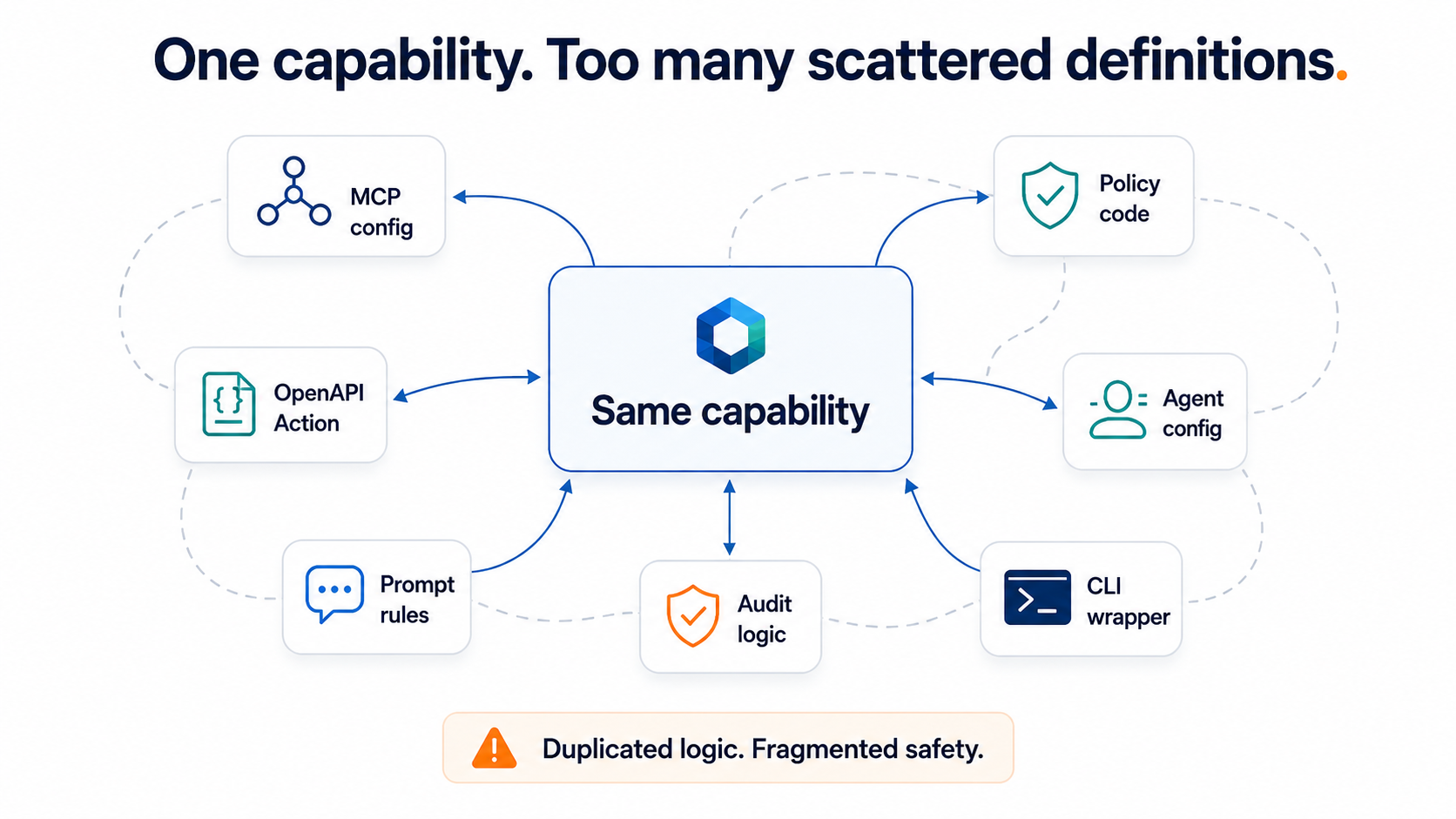
Teams quickly run into duplication when they support both.
The duplication problem
The same action may need:
- OpenAPI schema for Custom GPT
- MCP tool schema for agent runtimes
- prompt instructions for when to use it
- policy rules for safe arguments
- IDE config snippets
- contract tests
Example: create a draft pull request
The input schema is the same idea whether the caller is a Custom GPT, OpenCode, Codex or VS Code: repo, branch, title and files. But every runtime wants that description in a different shape.
Capability contract
  → OpenAPI path for Custom GPT
  → MCP tool for coding agents
  → OpenCode command
  → VS Code mcp.json snippet
  → policy bundle
Why Actlane starts from the capability
Instead of writing OpenAPI first or MCP first, Actlane starts with a higher-level capability manifest. OpenAPI and MCP become generated targets.
When to generate both
Generate both when the same safe action should be reused across browser-based GPTs, coding agents, IDEs and internal automations.
Why this topic is related to Actlane
OpenAI Actions and MCP tools often duplicate the same intent in different formats. Actlane treats both as generation targets from one capability definition, reducing drift between Custom GPT, MCP and agent runtimes.
Try Actlane
Actlane is a DSL-first toolkit for safe AI-agent actions. It treats both OpenAI Actions and MCP as generation targets from one capability definition—reducing drift between your Custom GPT, coding agents and internal automations.
Explore on GitHub · See the safe draft PR example · Back to all articles