Not every AI-agent action needs a human to click "approve." But some definitely do. The trick is asking at the right moment, not slowing everything down. Some AI-agent actions are safe to execute immediately. Others need human review. The challenge is not to ask for approval all the time; it is to ask at the right moment.
Risk classes
| Class | Examples | Approval |
|---|---|---|
| Read-only | search repo, read docs, inspect CI status | Usually no |
| Draft | create draft PR, create draft issue | Sometimes |
| Mutating | commit files, update ticket, send message | Often |
| Privileged | deploy, delete, change secrets, production workflow edits | Always |
Why approval should be tied to capabilities
If approval logic lives only in the agent prompt, it is hard to audit and hard to reuse. If it lives in the capability policy, it can travel with the generated MCP tool, OpenAPI Action and gateway bundle.
Actlane policy example
approval:
  required: true
  reason: mutating-git-operation
  show:
    - repo
    - branch
    - changedFiles
    - tests
What users should approve
A useful approval prompt should show the planned action, target system, affected resources, policy mutations and risks. It should not ask the user to approve a vague “tool call.”
Approval is not a replacement for validation
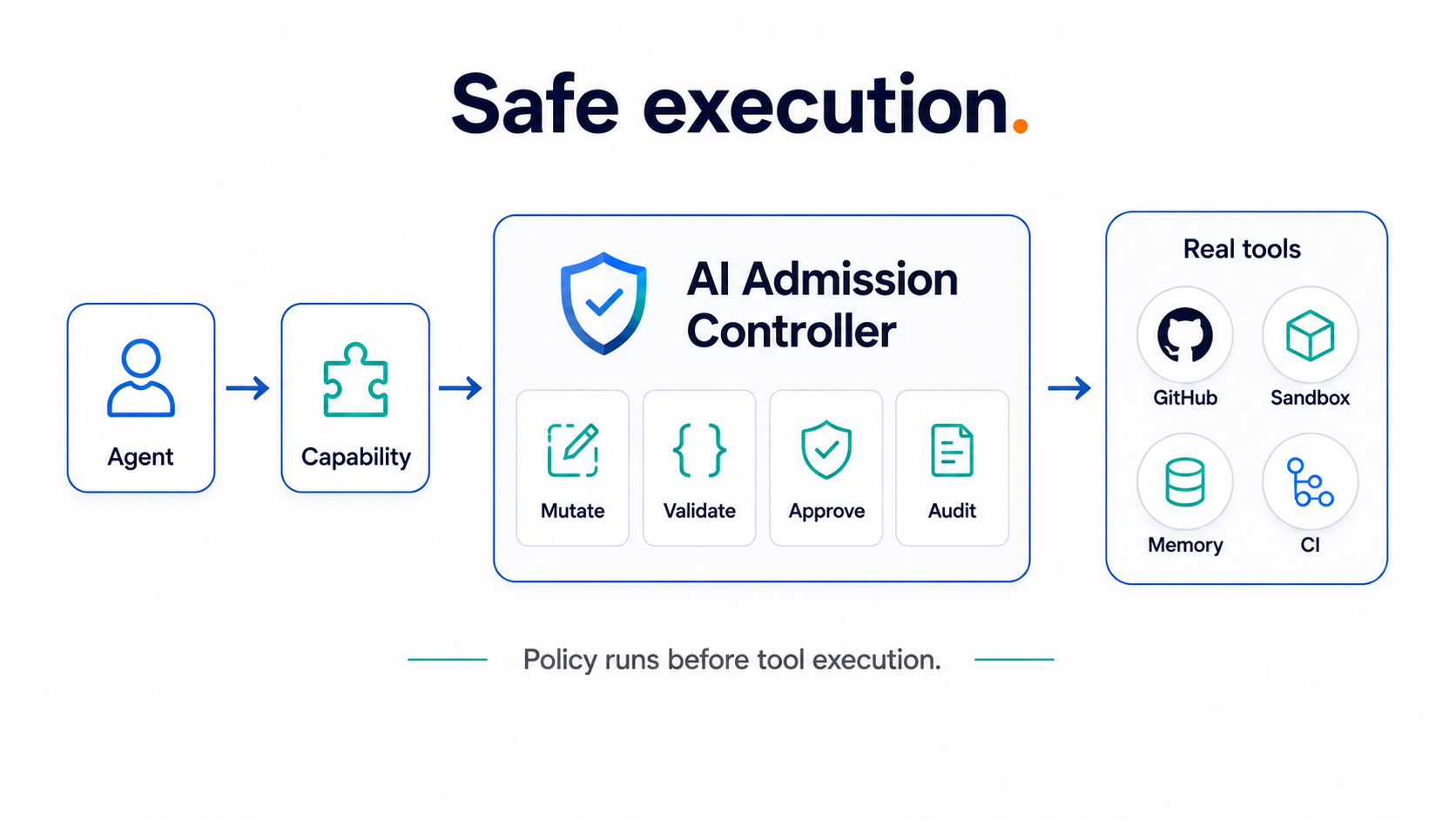
Human approval should happen after automatic validation. Do not ask a person to approve something that policy should have rejected automatically.
validate first
mutate safe defaults
show diff
ask approval only if needed
execute
audit
Why this topic is related to Actlane
Human approval is part of the capability contract. Actlane lets a team declare when an AI-agent action needs approval, then generate policies and runtime metadata that make approval visible and enforceable.
Try Actlane
Actlane is a DSL-first toolkit for safe AI-agent actions. It lets you declare when an action needs approval—generating policies and metadata that make approval visible, auditable and enforceable across all your agent runtimes.
Explore on GitHub · See the safe draft PR example · Back to all articles